

Standard
Tags in the browser
Page view, add to cart, checkout and purchase, fired the way each ad platform already expects. This is the setup every media buyer knows how to read.
You bring the brand and the catalog. We ship a Medusa backend with a Next.js storefront — your UI, your catalog, cart, checkout and payments wired end to end. Flat fee, and the repo is yours.
Book a 20-min call
Free, no pitch deck — talk to the engineer who would build your store
This is the shape of store a Sprint delivers
Built by an engineer who shipped at
How we work
Stage 1 ships a branded Medusa storefront you can take toward launch. Stage 2 extends it — migrations, B2B, multi-region — only once the store is live and you know what you actually need.
Google Ads, Meta, Instagram, TikTok and the rest. Browser tags plus a server-side path, so the conversion still lands when the cookie does not.
€1,500 flat
See what's includedShip the storefront for a flat fee. Then extend modules, regions and integrations — never the other way around.
Add-on · €1,500 flat
The Sprint ships the store. This wires the measurement before you spend. Same conversions, two paths: the usual tags in the browser, and a server-side send that does not depend on the cookie.
Tag on the storefront, plus enhanced conversions from the server.
Pixel in the browser and the Conversions API from the server.
Pixel in the browser and the Events API from the server.
Pinterest, LinkedIn, Snap and the next platform the campaign needs. Same pattern.
Standard
Page view, add to cart, checkout and purchase, fired the way each ad platform already expects. This is the setup every media buyer knows how to read.
Server-side
Safari, ad blockers and a rejected cookie stop the pixel. The server still sends the conversion, so the campaign is not blind the moment the browser opts out.
€1,500
Flat. Not folded into the €4,900 Sprint. Add it with the build, or the week you turn ads on.
Both paths, one price. The store and the measurement ship as one system, not a tag bolted on after the campaign is already live.
Real Statement of Work, day-by-day timeline and the deliverables list — including what we deliberately leave out of the 14 days. One email. No funnel.
Reference build
The Sprint exists because every store we saw stall had the same cause: an open-ended scope. Fix the scope, ship the storefront, then extend what real customers actually ask for.
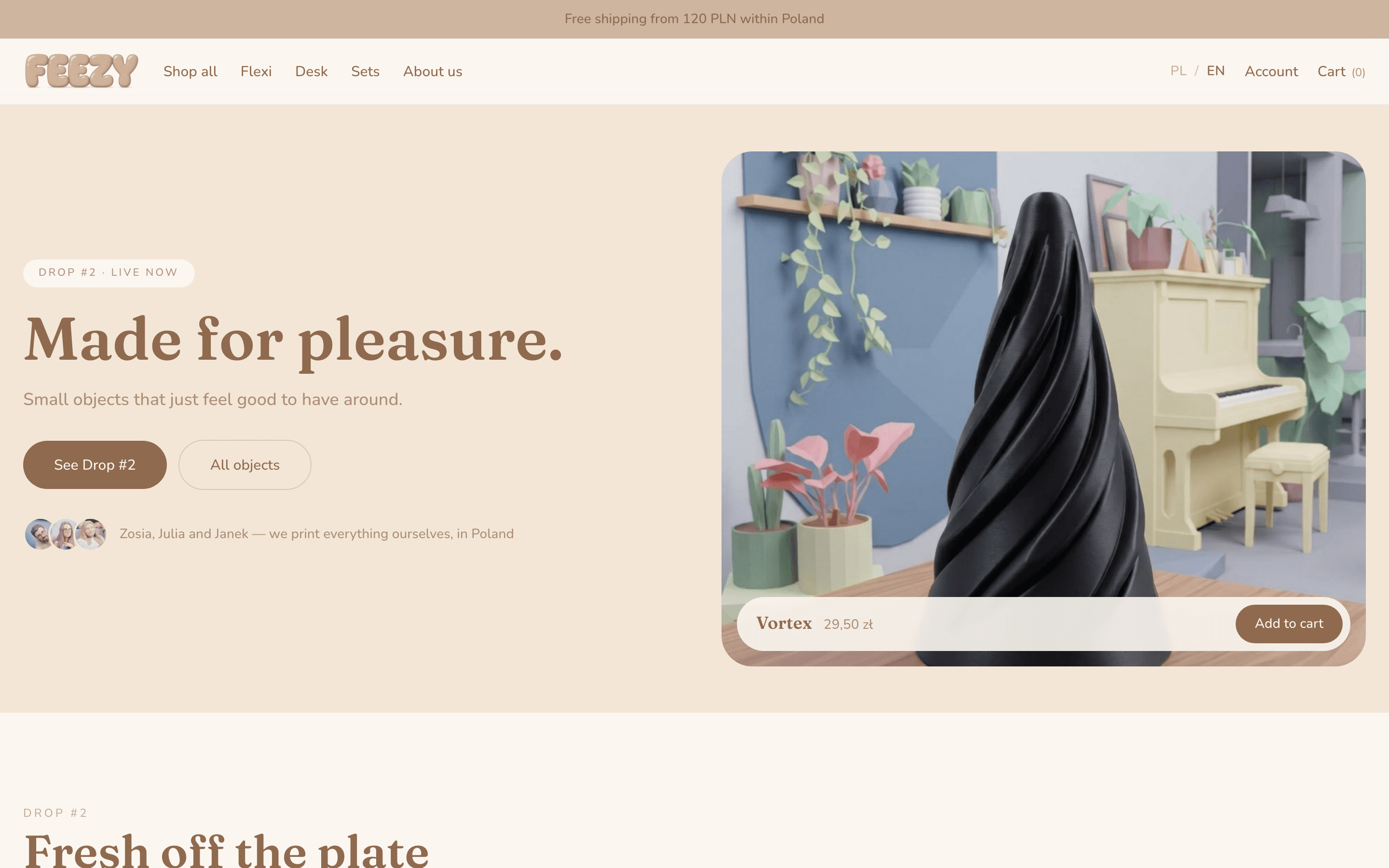
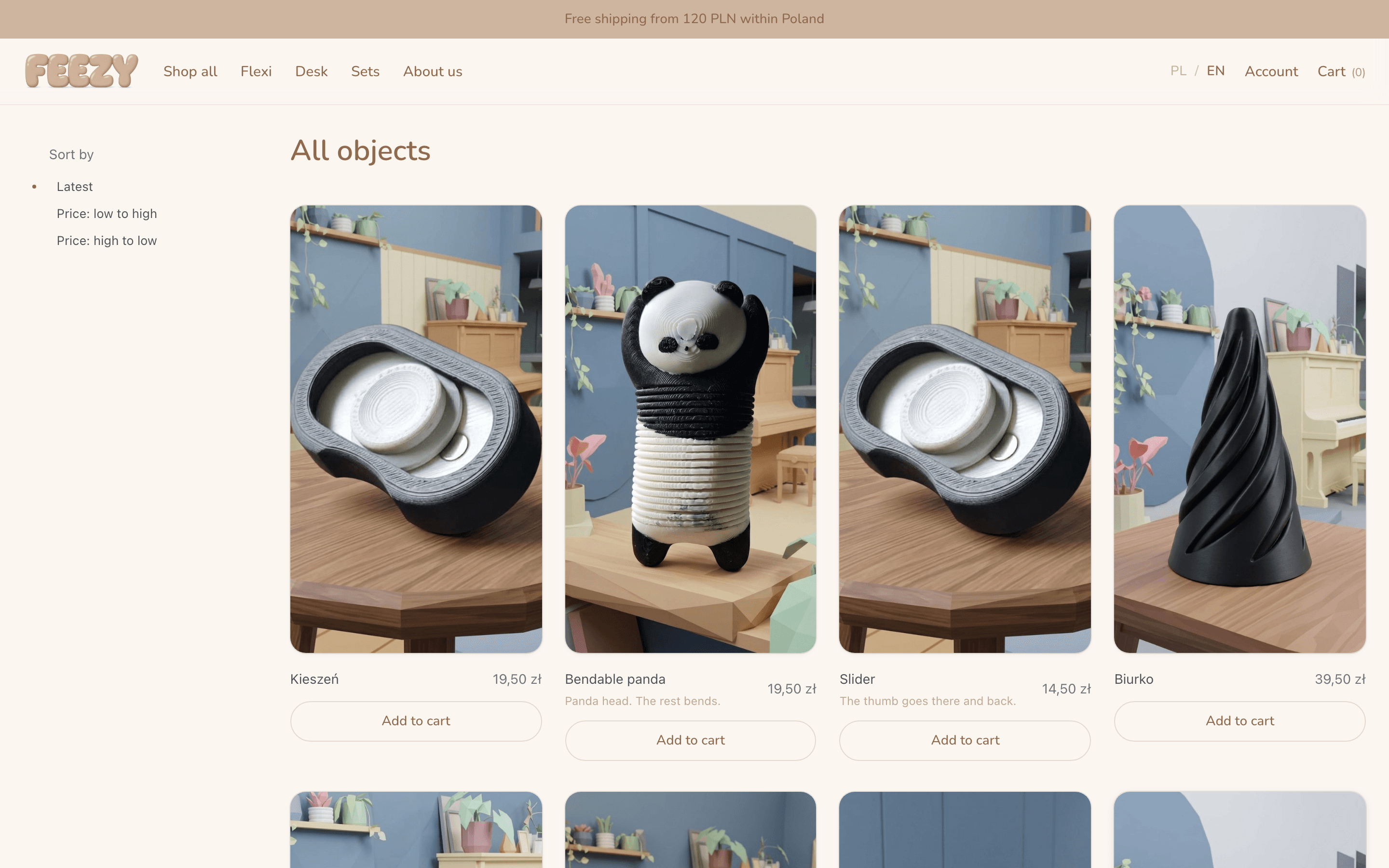
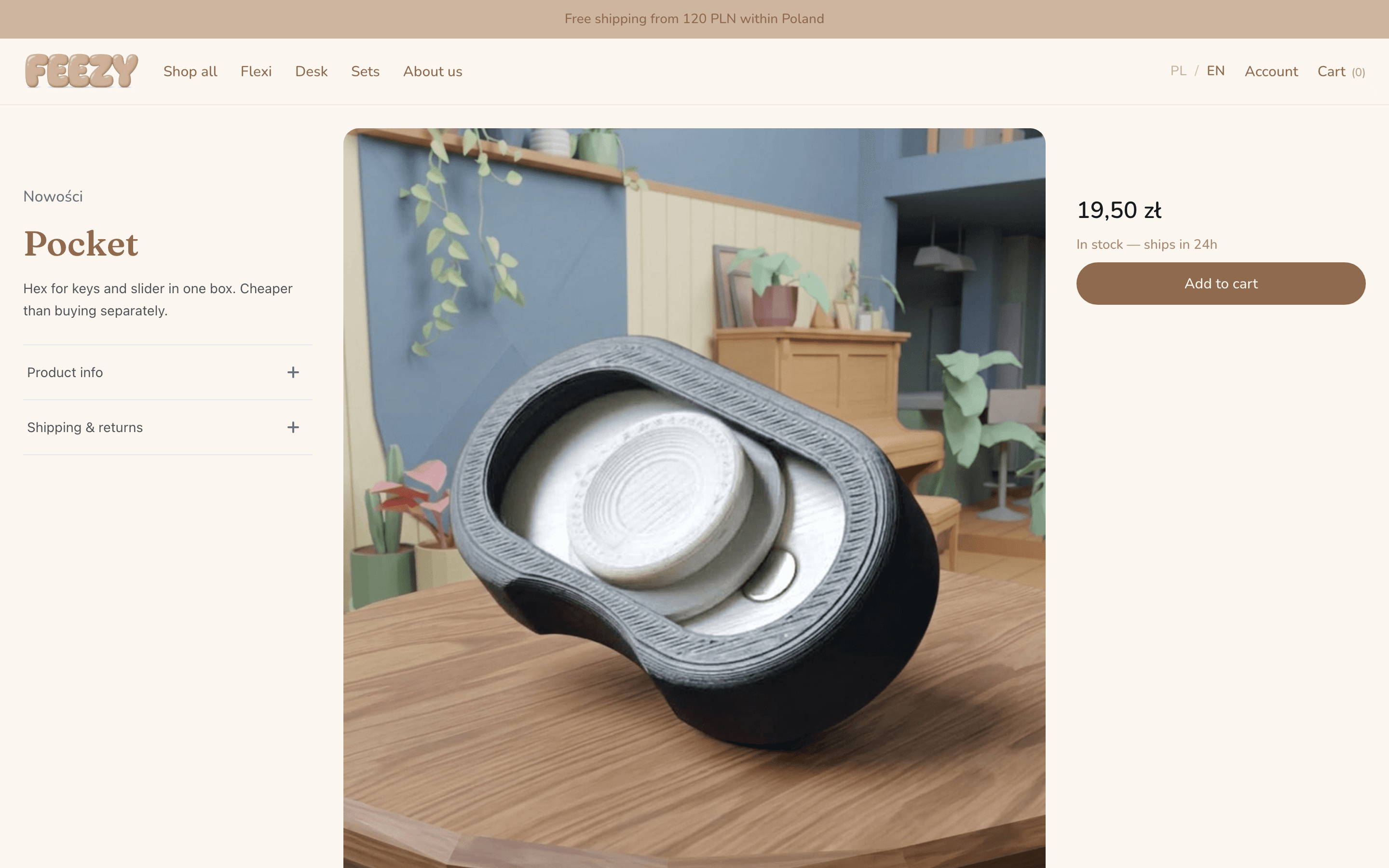
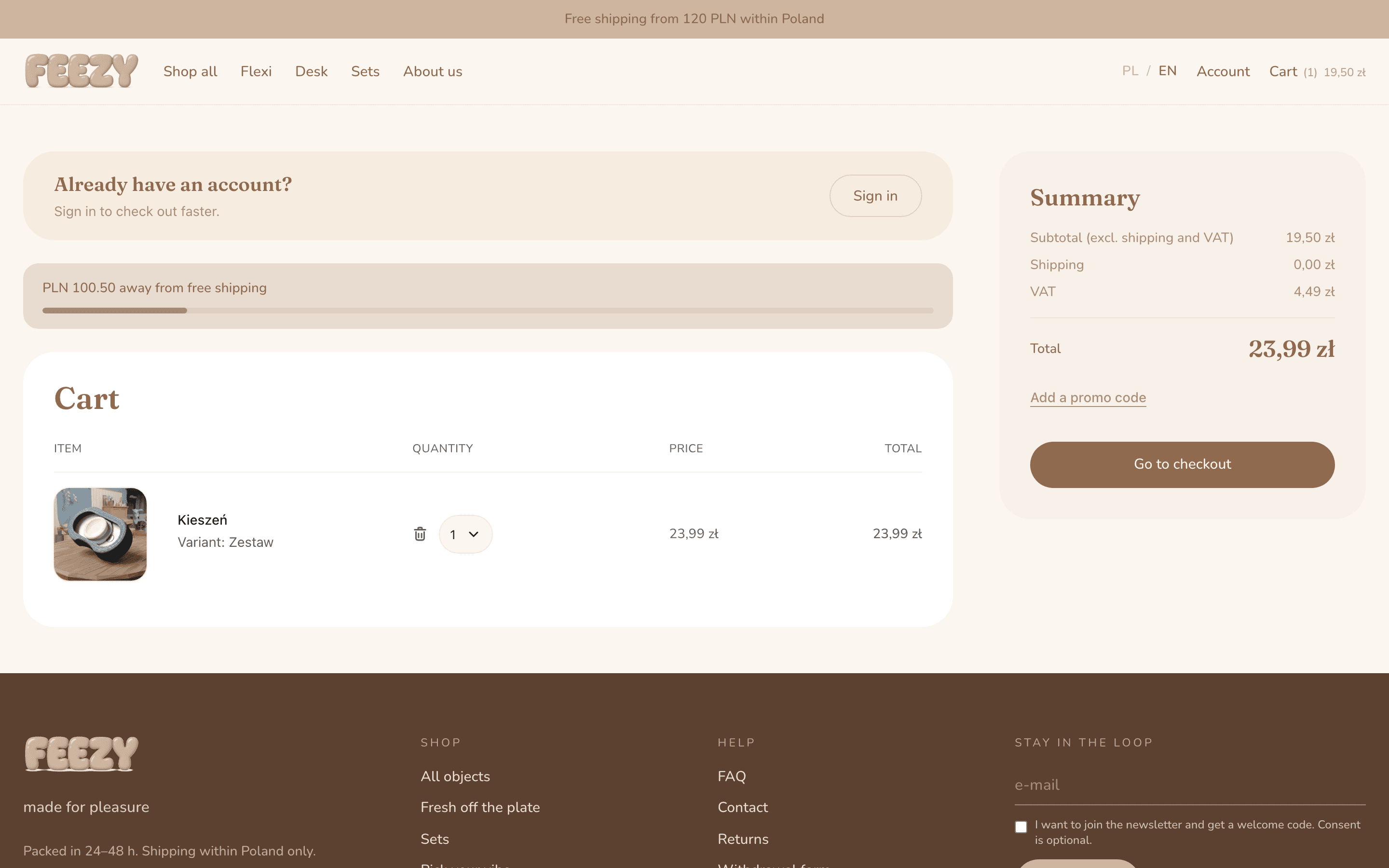
Medusa storefront we shipped — see it live at feezy.pl
The 14-Day Store Sprint
From a brand and catalog brief to a storefront you can click, share and take toward launch.
Tap a step to see what happens
Day 1 · Step 1 of 5
A 30-minute call on brand, catalog shape, payments and the flows you cannot launch without. Within 24 hours you get a tight Statement of Work — pages, modules, and an explicit list of what sits outside the 14 days.
Why Medusa + Launch14
Themes and page builders hit a wall the moment you need custom checkout logic, unusual catalog rules, or a storefront that actually looks like your brand. Medusa gives you an open commerce engine; we ship the branded Next.js storefront on top of it — flat fee, one engineer, two weeks.
Layout, typography, product cards, cart and checkout built around your identity. Customers land on something that feels like your brand instead of the same template they saw on three other stores this week.
Catalog, cart, checkout, payments and admin — wired and deployed. You get a store you can run and extend, not a forty-page architecture document and a quarterly roadmap.
The Sprint is fixed in price and in scope, and the SOW says out loud what waits for Stage 2 — data migration, B2B flows, ERP. No retainer hiding in the contract, no discovery phase billed by the hour.
Layout, typography, product cards, cart and checkout built around your identity. Customers land on something that feels like your brand instead of the same template they saw on three other stores this week.
Catalog, cart, checkout, payments and admin — wired and deployed. You get a store you can run and extend, not a forty-page architecture document and a quarterly roadmap.
The Sprint is fixed in price and in scope, and the SOW says out loud what waits for Stage 2 — data migration, B2B flows, ERP. No retainer hiding in the contract, no discovery phase billed by the hour.
Meet the founder

Founder @ Launch14. 21 years shipping software for enterprise and scale-up teams.
21 years building software for brands like PGE, ING Życie, LOT and Onet, plus my own Medusa store running in production. I have watched enough e-commerce projects stall to know the pattern: the scope is open-ended, the agency bills discovery, and the store is still not live nine months later. The Store Sprint is the opposite deal — one senior engineer, Medusa and Next.js, a fixed price, and a storefront you can click in two weeks. The repo is yours on day 14.
“Stop fighting your theme. Ship a storefront you own.”
Why teams move
Three walls that show up again and again on the first call:
Platform fees, app subscriptions and per-transaction cuts scale with revenue, not with the work involved. On Medusa the store runs on your own hosting, and the apps you replaced are code in your repo.
Bundles, deposits, B2B pricing, unusual shipping rules — hosted checkouts allow exactly what the vendor allows. Medusa exposes the cart and order flow as an API, so the rules follow your business.
Migrating away from a theme means rebuilding it. After a Sprint the storefront is a Next.js app in your repository — any competent team can pick it up, including one that is not us.
FAQ
What brands usually ask before booking the call.
Drop your email. You get the 14-day plan, the example SOW and our stack notes. We follow up only if it makes sense.